A delegation of 32 teaching administrators and academic staff from Nanfang College, Guangzhou (NCG) took part in a five-day professional development programme at Zhejiang University from 24 to 28 August, exploring new approaches to teaching management, student education and institutional development.
Led by Professor Xiaoying Zhong, Director of the Academic Affairs Office, the delegation brought together representatives from relevant administrative departments, academic leaders responsible for teaching and learning, and faculty members from across the College. The programme was designed to support NCG’s “Double Excellence” initiative, strengthen connections across admissions, education and employment, and further develop the professional capabilities of its teaching administration team.
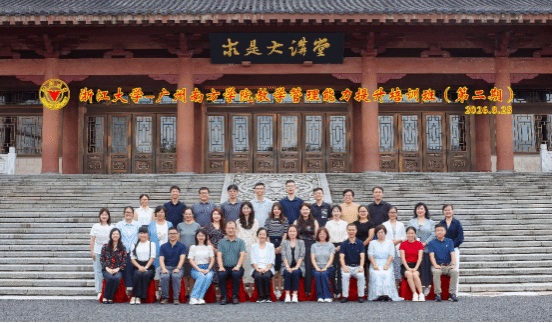
Opening the programme, Zhong encouraged participants to make full use of the opportunity to learn from practices beyond NCG and, more importantly, to translate what they learned into improvements in their own work.
Three themes ran through the five-day programme: the development of high-quality applied higher education under the “Double Excellence” initiative; closer integration of admissions, education and employment; and the use of artificial intelligence to enhance teaching administration. Sessions combined academic perspectives with case studies and hands-on training, connecting broader developments in higher education with the practical challenges facing university administrators.
Advancing “Double Excellence” and Applied Higher Education
The first strand examined how applied universities can strengthen academic development while responding more closely to regional economic and social needs.
Shengyi Gong, Deputy Director of the Academic Affairs Office at Zhejiang University of Science and Technology, explored ways in which local universities can better serve regional development. Drawing on a multidimensional framework, he discussed approaches to institutional development and provided a systematic overview of the “Double Excellence” initiative.
Licai Wang, Deputy Director of the Academic Affairs Office at Hangzhou City University, shared his institution’s experience in optimising disciplinary structures, dynamically adjusting academic programmes and strengthening integration among industry, education, research and urban development.
The discussion then turned to quality assurance. Zhijun Wang, Member of the Party Committee and Director of the Human Resources Office at Ningbo University of Finance and Economics, as well as Director of its Faculty Development Center and Institute of Higher Education, presented an approach to teaching quality monitoring and examined how applied universities can develop stronger internal quality assurance systems under the “Double Excellence” initiative.
Connecting Admissions, Education and Employment
A second strand focused on creating stronger links between who universities admit, how students are educated and where their studies lead after graduation.
Peizhang Shao, Dean of the School of Law and Social Sciences at Zhejiang University of Finance and Economics Dongfang College, approached the issue through a clear principle: academic programmes should respond to industry, education should evolve with changing needs, and employment outcomes should inform admissions. Drawing on the experience of private higher education, he explored how these connections can be translated into practical institutional mechanisms.
Wei Chen, Director of the Admissions and Employment Office at Hangzhou Dianzi University, examined the same challenge from the perspectives of institutional systems, industry–education integration, digital transformation and closed-loop management. His session highlighted ways of developing a sustainable framework connecting admissions, education and employment over the longer term.
Participants subsequently worked in groups to consider how these ideas could be applied at NCG. Their discussions focused on the future development of an integrated admissions–education–employment model, providing an opportunity to exchange perspectives and identify possible approaches to reform.
Using AI to Strengthen Teaching Administration
The third strand looked towards the changing role of technology in university administration.
Haozhe Jiang, a “Hundred Talents Program” Researcher at the College of Education, Zhejiang University, drew on current research to examine practical applications of artificial intelligence in teaching operations and research administration.
The programme also moved from discussion to hands-on practice. Guofeng Liu, founder and CEO of Hangzhou-based Zhiding Education Technology, led participants through practical exercises with AI tools, giving teaching administrators an opportunity to strengthen their ability to apply digital technologies in their work.
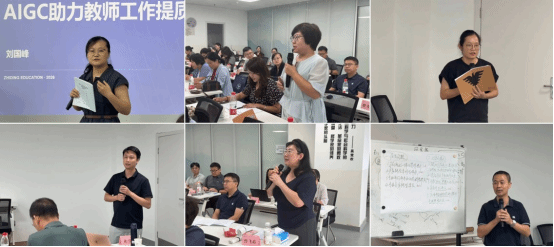
Together, the three strands addressed a common question for NCG: how teaching administration can better support the full student journey while responding to changes in higher education, industry and technology. The programme provided participants not only with examples from other institutions, but also with space to consider how those experiences could inform NCG’s own priorities.
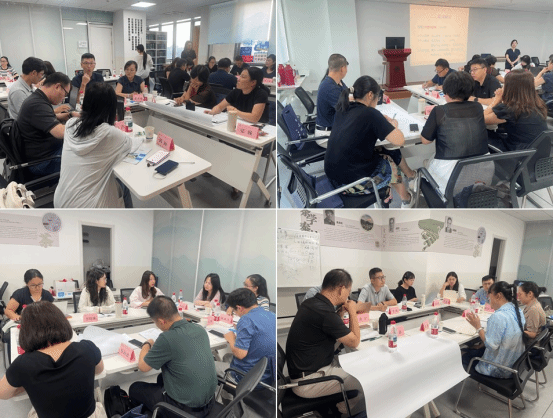
The next step will be to translate relevant practices from the programme into NCG’s own teaching and management, particularly by strengthening links between admissions, education and employment and making more effective use of digital tools. These efforts will support the College’s wider work under the “Double Excellence” initiative and its continued development as an applied university.
Source: https://www.nfu.edu.cn/info/2131/121441.htm


