Nanfang College, Guangzhou (NCG) has received a letter of appreciation from Dasha Community and Lianjiang Village in Zhuhai, recognising the contribution of its faculty and student volunteer to an English summer camp for local children.
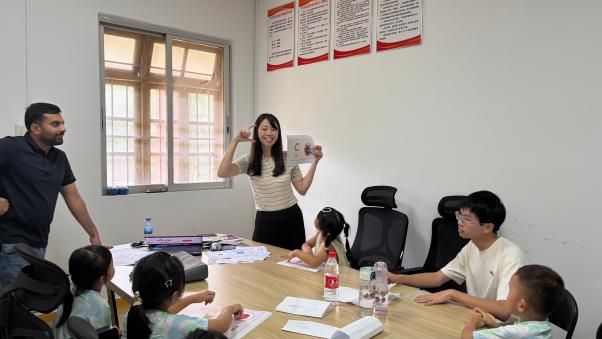
Held in Dasha Community, Lianzhou Town, Doumen District, the camp was jointly organised with Lianjiang Village as part of the “High-quality Development Project for Guangdong Counties, Towns and Villages”. It provided free English learning opportunities for rural children aged four to 15. Dr Jian Chen, Associate Professor at the School of Business and Assistant Dean of Yuanzhi Business School, and Danyun Xu of the Department of English, School of Foreign Languages, were invited to serve as faculty advisers. Jun Zeng, a 2024-entry French major from the School of Foreign Languages, took part throughout the programme as a Chinese student volunteer.
The six-day camp brought together seven Chinese and international university student volunteers from Beijing Normal University, Guangdong University of Finance, Guangzhou University, NCG and Dongguan University of Technology. The international volunteers came from Pakistan, South Sudan, Tanzania and the Democratic Republic of the Congo, four countries participating in the Belt and Road Initiative. Together, the volunteers worked with 27 local children through a programme combining immersive language learning with personal development activities.
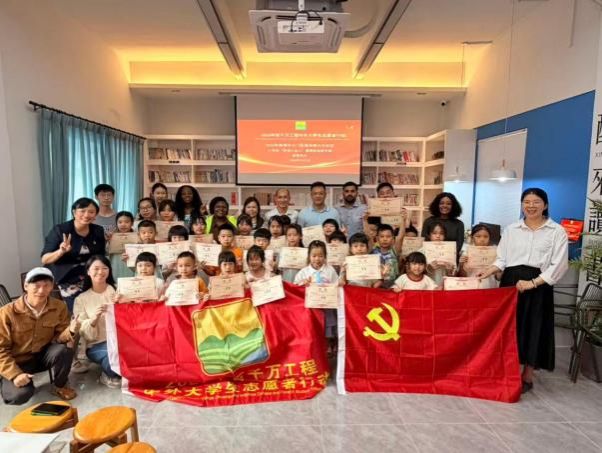
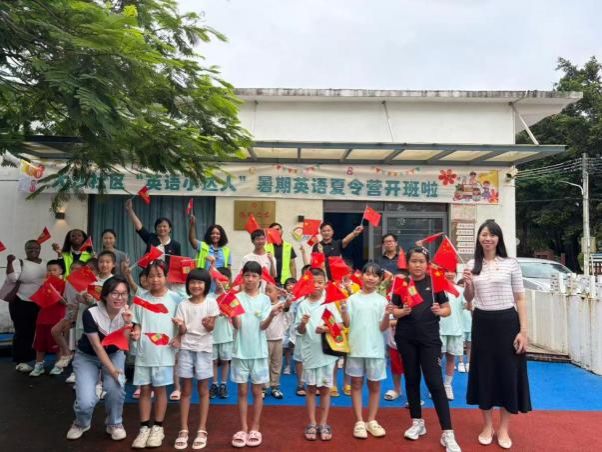
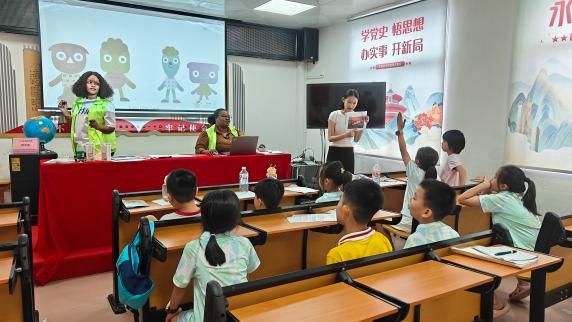
Rather than confining English learning to a conventional classroom, the programme was designed around interaction, experience and international exchange. Chen and Xu worked closely with the local community to refine the curriculum and develop a collaborative teaching model for Chinese and international volunteers, incorporating music, games and project-based learning into the sessions.
Technology formed one part of the learning experience. Chinese volunteers used an AI-assisted learning system alongside spaced-repetition techniques to support systematic vocabulary development. International volunteers, meanwhile, took learning outdoors through Touch of Nature, a programme inspired by Finnish approaches to nature education. Fields and other rural settings became spaces for language learning, while the cross-cultural project We Are Friends, We Are Together created opportunities for children and volunteers to share experiences and learn from one another.
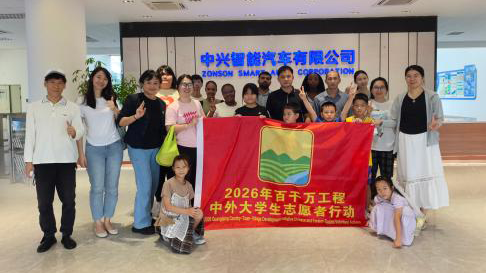
Learning also extended beyond language. Chen and Xu coordinated educational visits to ZTE’s smart vehicle facilities and the BYHEALTH Smart Factory, giving participants an opportunity to experience at first hand aspects of Zhuhai’s urban and rural development.
For Jun Zeng, the camp offered a different kind of cross-cultural learning experience. Working alongside international volunteers throughout the six days, she drew on her language skills as a French major to help bridge communication between Chinese and international team members and resolve practical issues in coordinating classroom activities. Her role placed her at the intersection of language learning, teamwork and intercultural communication.
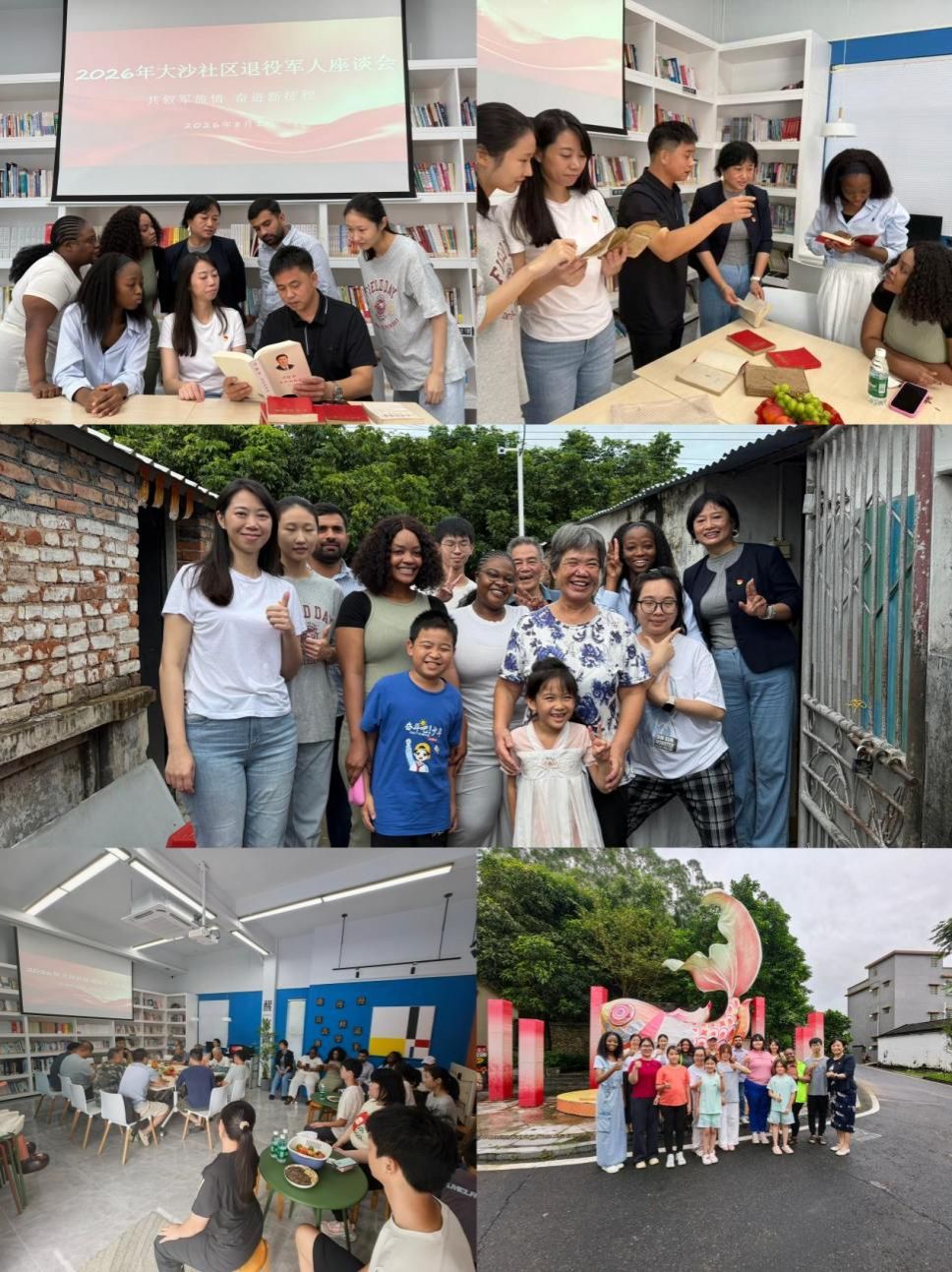
The NCG participants also spent time engaging with the local community beyond the summer camp. Through visits with residents, the study of historical materials on the educated youth movement, and discussions with military veterans, they gained further insight into improvements in rural living conditions and community wellbeing, while developing a deeper understanding of grassroots governance in China.
Reflecting on the experience, Chen said that applying professional knowledge to community service and bringing together education, research and practice in rural communities formed part of the responsibility of faculty at an applied university. Xu saw the outdoor and experiential approach as an opportunity to extend learning beyond the classroom, allowing children to acquire language skills and encounter the wider world through authentic settings. Zeng said that six days of teaching alongside Chinese and international volunteers had deepened her understanding of intercultural communication and the social responsibilities of young people.
The letter of appreciation from Dasha Community and Lianjiang Village recognised the support and contribution of NCG faculty and students throughout the programme. Their involvement also reflects the College’s wider commitment to connecting education with community engagement and social practice.
NCG will continue to create opportunities for faculty and students to contribute to the “High-quality Development Project for Guangdong Counties, Towns and Villages”, while strengthening the integration of social practice with broader ideological and political education. Through such initiatives, the College aims to support more equitable access to educational resources between urban and rural communities and contribute to the continued development of rural education.
Source: https://www.nfu.edu.cn/info/2151/121461.htm


