Nanfang College, Guangzhou (NCG) convened a collective briefing for newly appointed Party branch secretaries in its administrative departments on 21 October, outlining their responsibilities for strengthening Party building and integrating organisational leadership with the College's day-to-day operations.
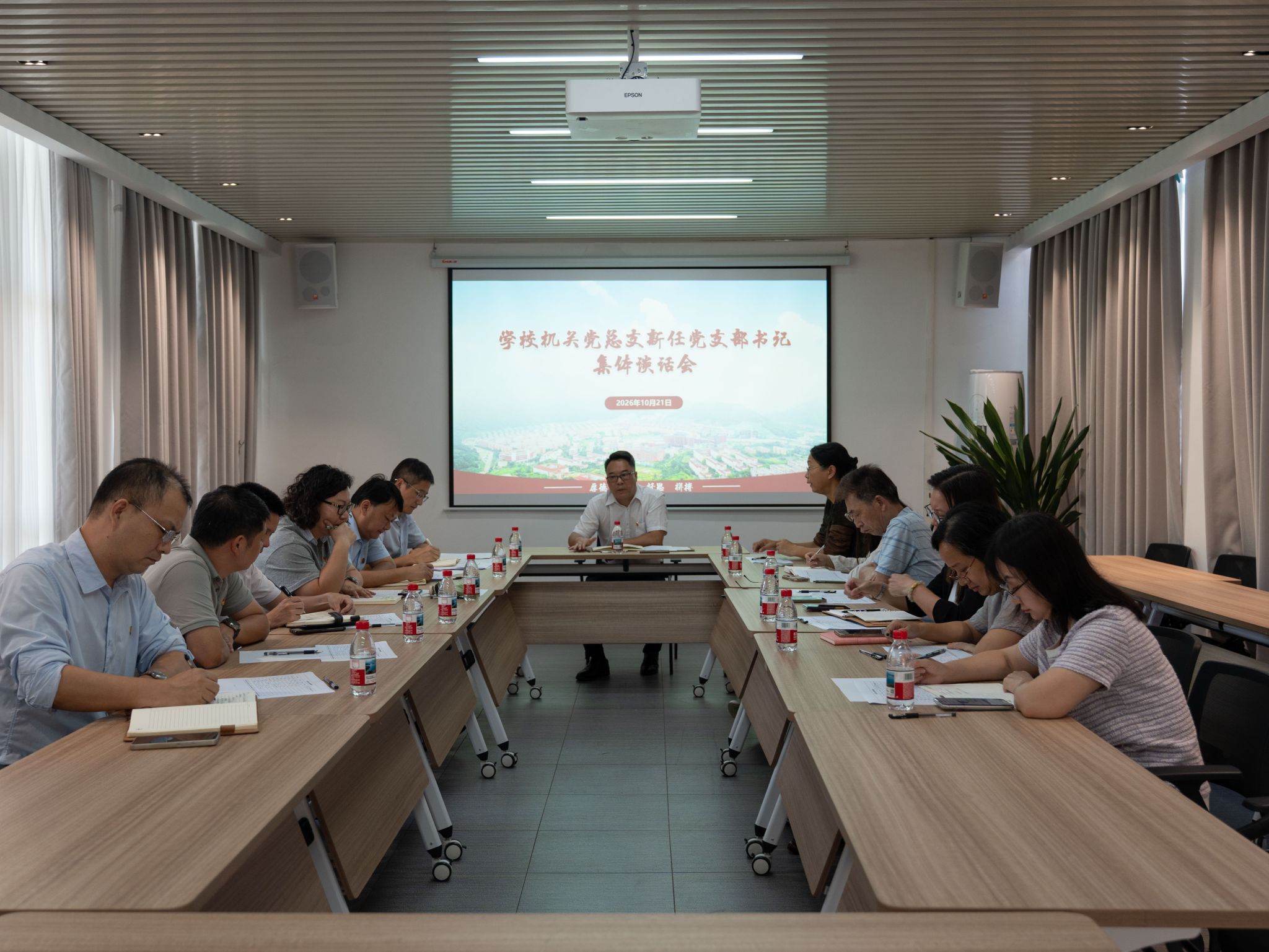
NCG Party Secretary Ruan Yingdong attended the meeting alongside the Secretary and committee members of the Administrative Party General Branch and all administrative Party branch secretaries. The meeting sought to strengthen political awareness, reinforce accountability and ensure that the newly appointed secretaries were equipped to fulfil their responsibilities.
A central focus was the importance of studying and implementing Xi Jinping Thought on Party Building, both as a guiding framework and in its practical application. Participants were urged to deepen their understanding of the decisive significance of the “Two Establishments”, strengthen the “Four Consciousnesses” and “Four Confidences”, and uphold the “Two Upholds”. The meeting also emphasised the political responsibility of governing and strengthening the Party and the need to advance full and rigorous Party self-governance.
Addressing the newly appointed secretaries, Ruan highlighted the responsibilities of Party organisations within administrative departments and their role in supporting the College's development. He called for higher standards in Party-building work, closer alignment between Party activities and departmental priorities, and stronger organisational effectiveness, enabling administrative Party branches to lead by example.
Ruan set out four priorities for effective branch leadership.
The first was to strengthen political development and take primary responsibility for Party building. Branch secretaries were expected to lead by example in theoretical study, maintain political discipline and uphold the Party's rules and principles.
The second centred on integrating Party building with administrative responsibilities so that the two reinforce one another. Branch activities should be closely connected with departmental priorities and the practical work of serving faculty and students.
The third priority was to strengthen branch governance through consistent and effective implementation of organisational responsibilities. This included improving standardisation, ensuring compliance with established procedures and raising the overall quality of branch development.
Finally, Ruan called for stronger professional conduct and a service-oriented approach. He urged branch secretaries to respond to the pressing concerns and practical needs of faculty and students, encourage Party members to lead by example, and foster an administrative workforce characterised by loyalty, integrity and accountability.
The newly appointed secretaries expressed their commitment to assuming primary responsibility for Party building within their respective branches. They pledged to translate the trust placed in them into effective leadership and practical action, strengthening grassroots Party organisations and supporting NCG's high-quality development.


