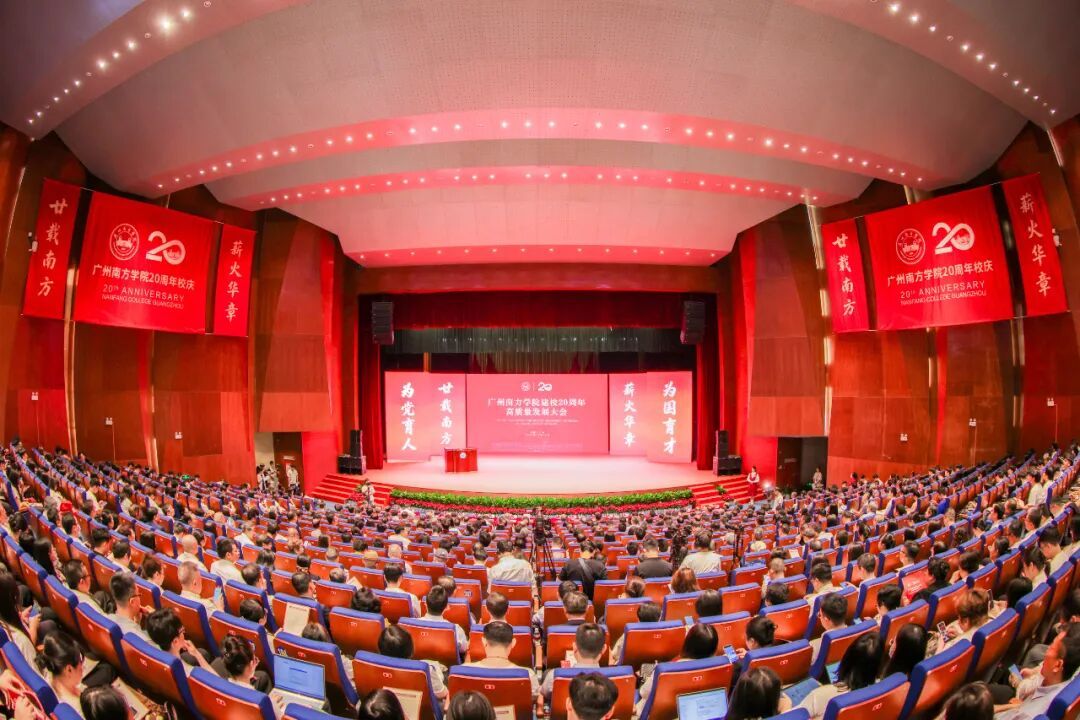
Twenty years of growth, achievement and shared endeavour brought the Nanfang College, Guangzhou (NCG) community together on 18 October for a milestone celebration that looked as much to the future as to the past.
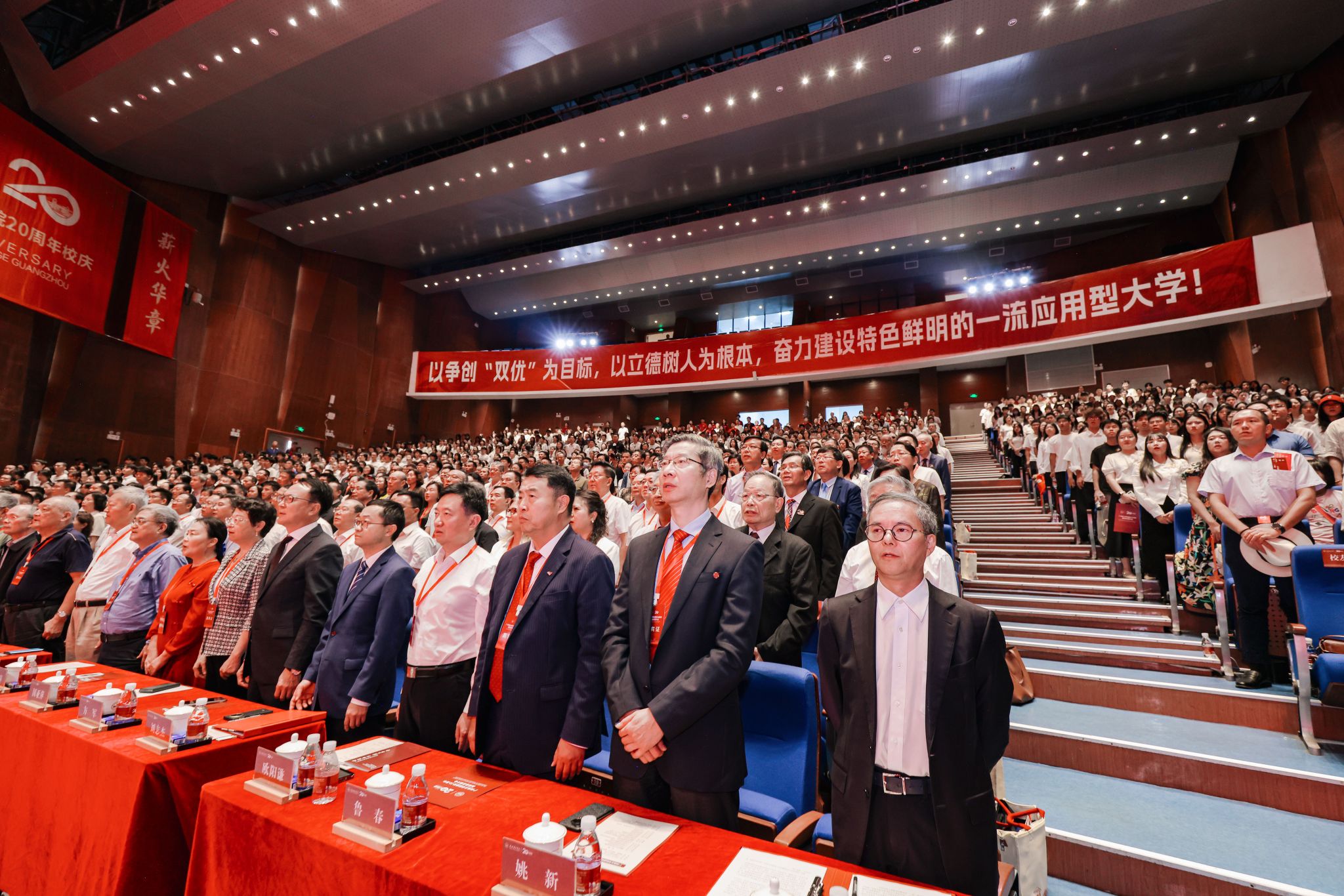
The College’s 20th Anniversary High-Quality Development Conference welcomed academic leaders, government officials, industry partners, faculty, students and alumni from China and overseas. Alongside reflections on NCG’s development since 2006, the occasion marked the launch of its initiative to pursue “Double Excellence”, setting a new direction for the College’s next stage of growth.
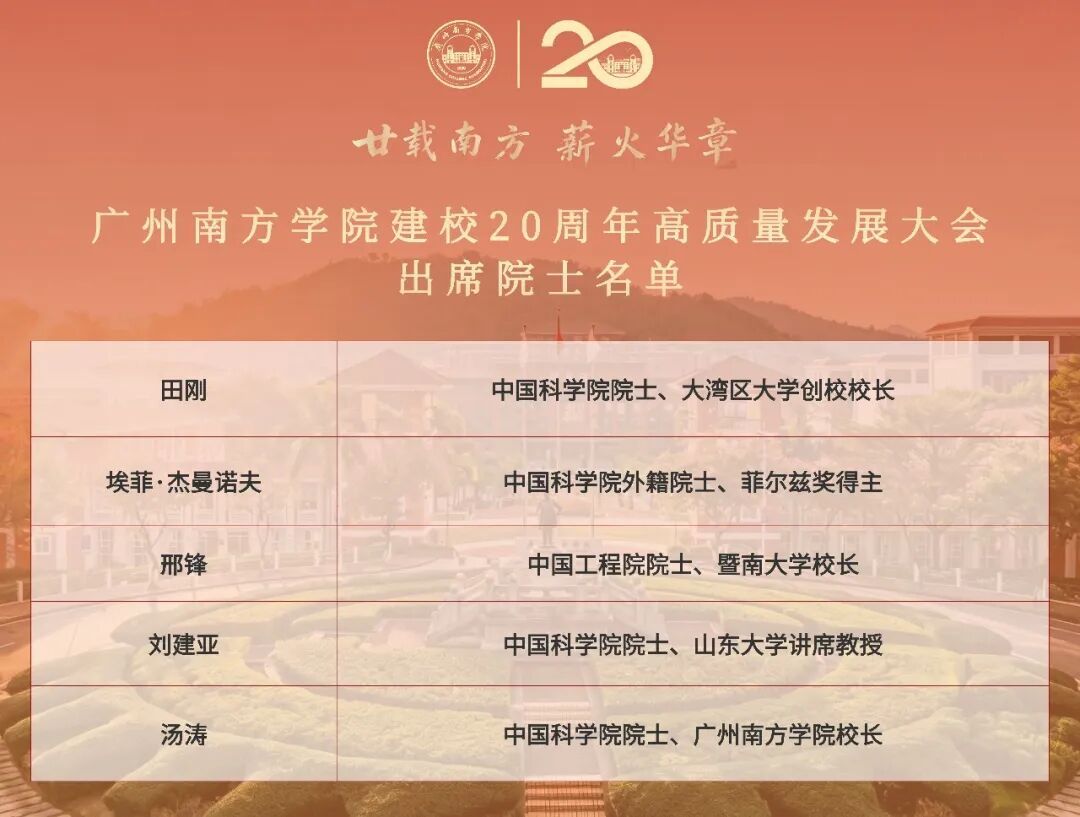
Among the distinguished guests were Fang Jun, former Deputy Director-General of the Department of International Cooperation and Exchanges at the Ministry of Education; Professor Tian Gang, founding President of the University of the Greater Bay Area and Member of the Chinese Academy of Sciences; Professor Efim Zelmanov, Fields Medal recipient and Foreign Member of the Chinese Academy of Sciences; renowned mathematician Professor Yitang Zhang; President Xing Feng of Jinan University, Member of the Chinese Academy of Engineering; and Professor Liu Jianya, Member of the Chinese Academy of Sciences and Chair Professor at Shandong University.
Other university representatives included Ouyang Qian, Party Secretary of Guangzhou University; President Chen Zhi of Beijing Normal-Hong Kong Baptist University; former President Li Mengfeng of Southern Medical University; former President Wang Xinhua of Guangzhou Medical University; Vice President Zhong Qiang of South China Agricultural University; Executive President Lu Chun of City University of Hong Kong (Dongguan); and Vice-President (Research and Innovation) Yao Xin of Lingnan University.
Sun Yat-sen University was represented by former President Huang Daren, former Party Secretary Chen Chunsheng, former Executive Deputy Party Secretary Liang Qingyin, former Deputy Party Secretary Li Ping and Executive Deputy Party Secretary Guo Yaping. Also attending were Zhao Long, Party Secretary of Conghua District; Liu Zhijie, Deputy Party Secretary and District Mayor of Conghua; and Zhang Yaorong, Executive Vice President of the Guangdong Association for Private Education.
NCG founder Zhu Mengyi, Chairman Zhang Yi, former President Yu Shiyou, former Party Secretary Chen Tenghua and President Tao Tang joined the celebrations, together with representatives from the University of Macau, the University of Reading and other institutions, as well as industry partners including Huawei and iFLYTEK. The conference was chaired by Party Secretary and Supervising Commissioner Ruan Yingdong.
Two Decades of Growth, with Students at the Centre
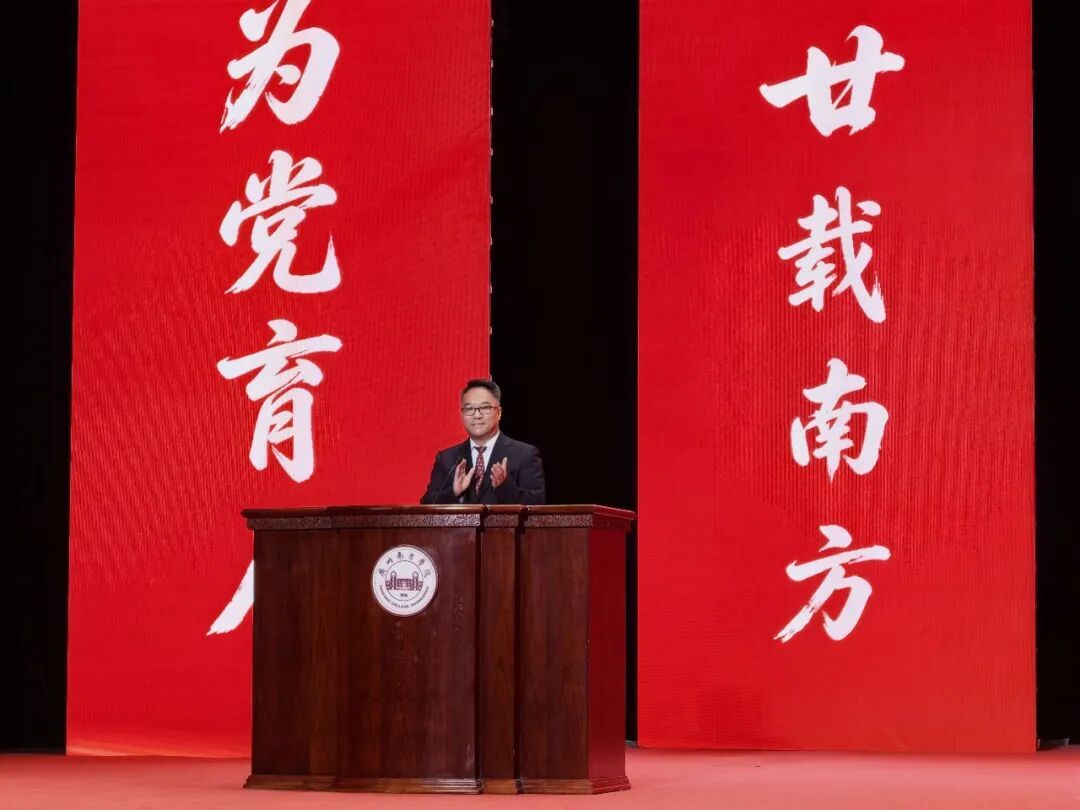
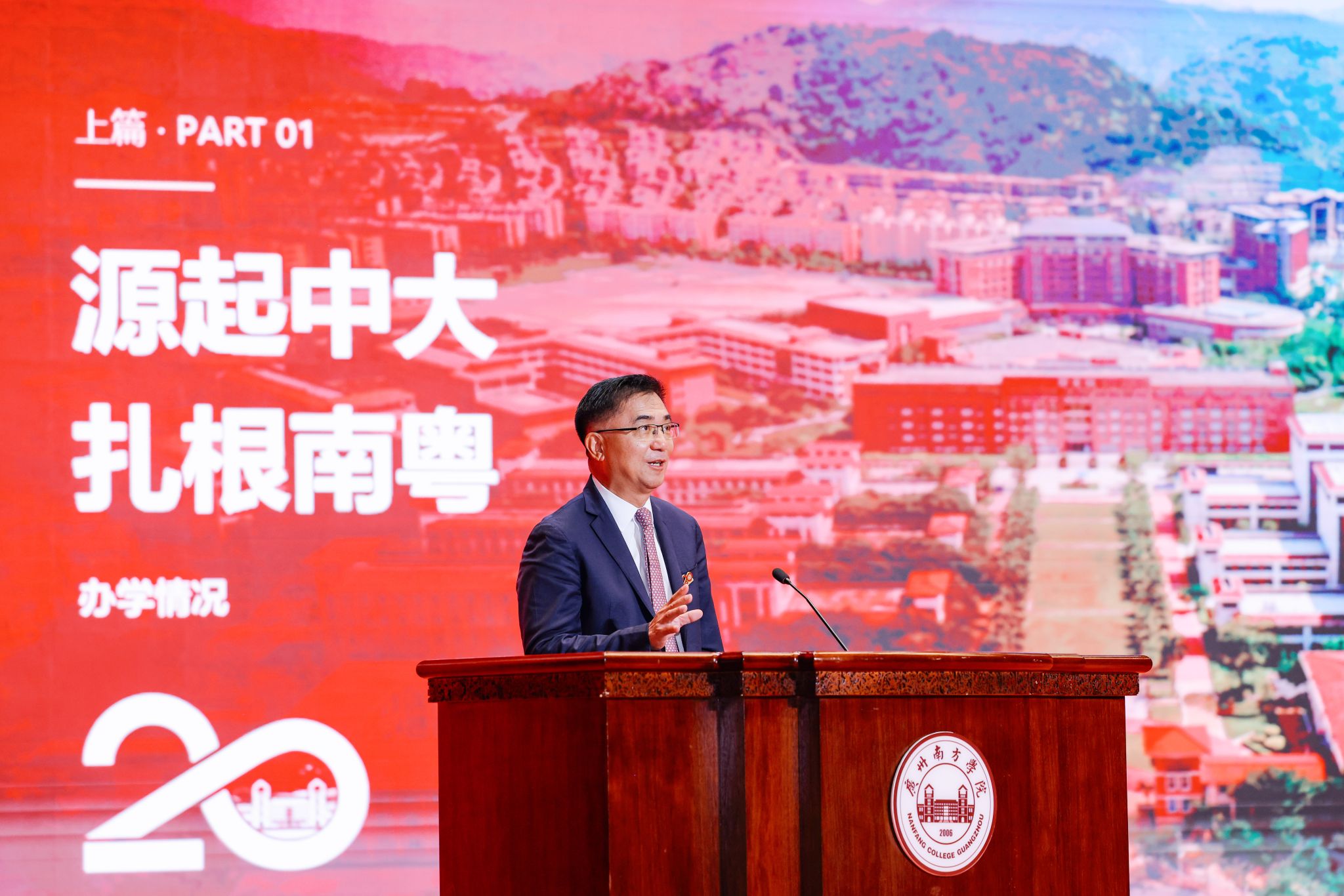
In his report on the NCG’s development, President Tang reflected on the progress made since NCG’s establishment and the educational priorities that have shaped its identity.
More than 75,000 students have graduated from NCG over the past 20 years. The College has ranked first nationally among comprehensive private universities for two consecutive years in the rankings published by Cuaa.net, while four of its undergraduate programmes have been recognised as National First-Class Undergraduate Programmes and a further six have received provincial recognition.
Behind these achievements is a development approach that combines application-oriented education, liberal arts education and internationalisation. NCG has strengthened its links with industry through partnerships with leading companies such as Huawei, iFLYTEK, Yonyou and JD.com, bringing academic learning closer to professional practice and emerging technological needs.
For President Tang, the next stage will involve building on these foundations rather than departing from them. Stronger clusters of academic disciplines and programmes, deeper industry–education integration and a greater contribution to regional economic and social development will be central to NCG’s ambition to become a distinctive, high-level application-oriented university.
That commitment to students also featured prominently in the keynote address by Professor Huang Daren, former President of Sun Yat-sen University.
Reflecting on NCG’s first two decades, Professor Huang said what impressed him most was the College’s emphasis on student satisfaction and its determination to ensure that every student is seen and valued. He also welcomed its approach to industry–education integration, in which industry identifies real-world challenges and academic programmes respond through teaching, research and practical learning.
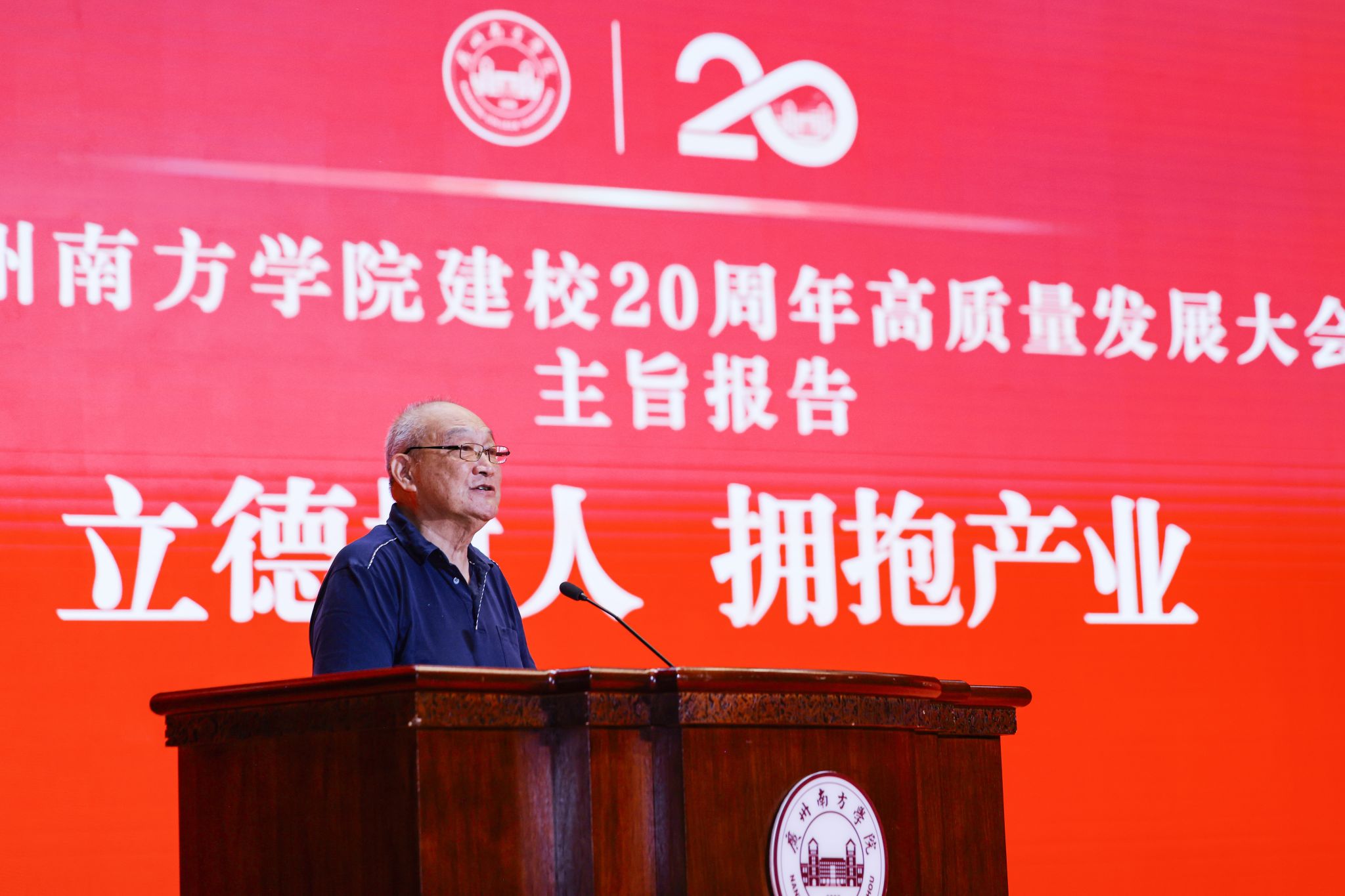
The willingness of leading companies to bring genuine projects into the university, he observed, creates valuable opportunities to prepare graduates with the skills and experience needed by the regional economy. Looking ahead, he encouraged NCG to anticipate industry trends and develop distinctive academic strengths that would make a meaningful contribution to the Guangdong–Hong Kong–Macao Greater Bay Area and the country.
Partnerships That Extend Beyond the Campus
The importance of collaboration was a recurring theme throughout the conference, with speakers highlighting the role of universities in connecting education, research and regional development.
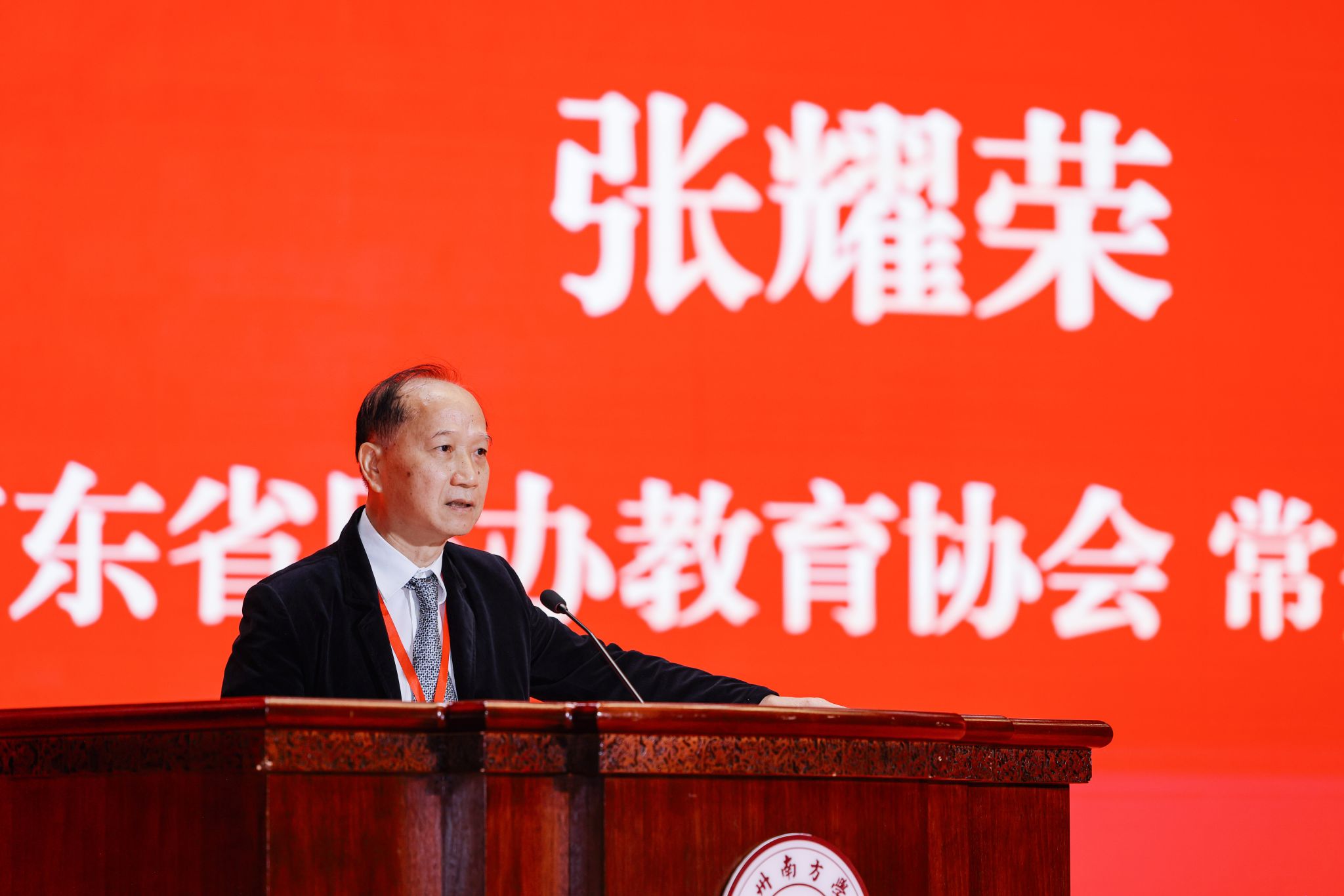
President Xing Feng of Jinan University commended NCG for maintaining a clear application-oriented educational mission while responding to developments at the forefront of industry. He expressed Jinan University’s willingness to deepen cooperation with NCG in talent development, academic disciplines and research, contributing jointly to the development of the Greater Bay Area.
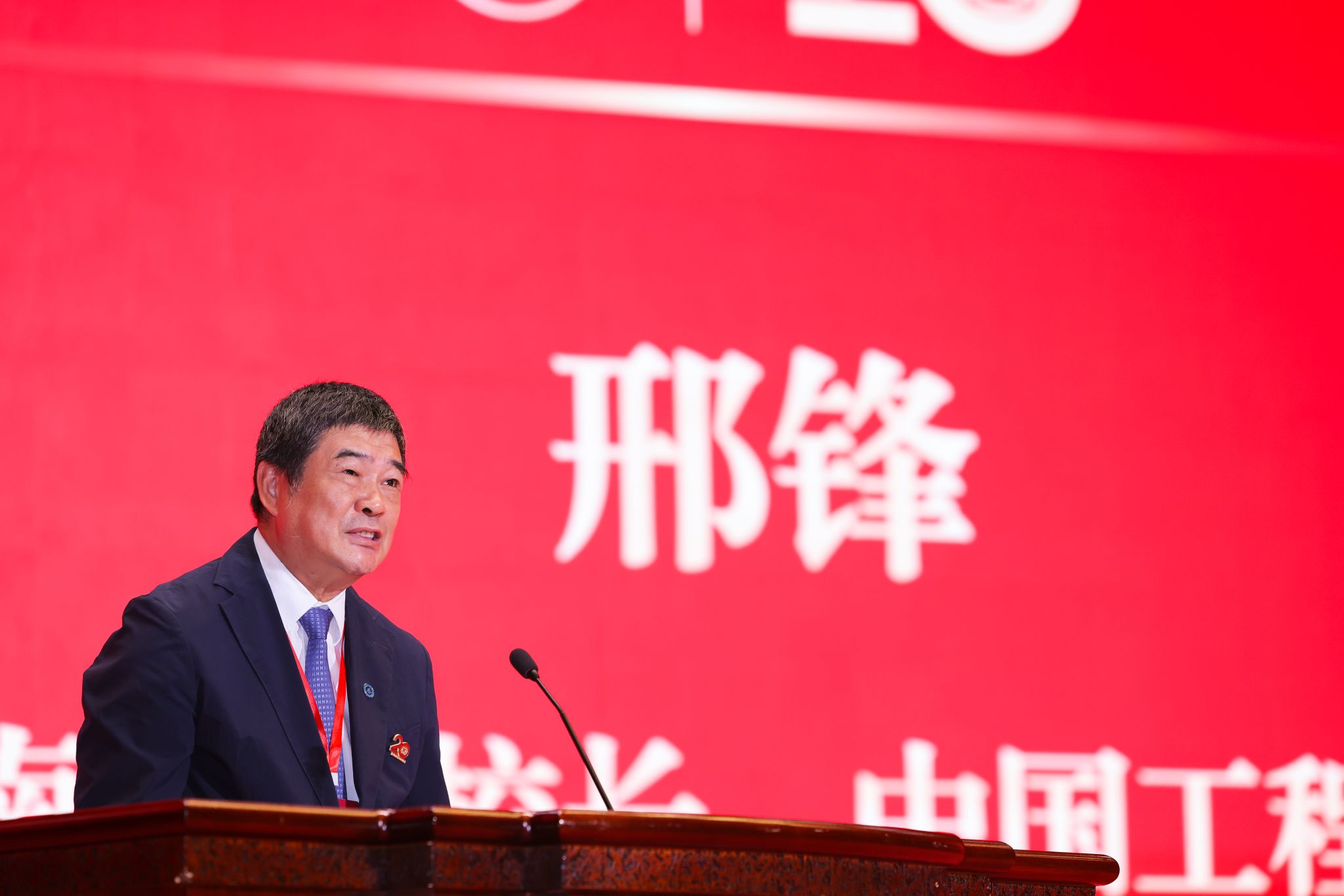
For Conghua, the College’s continued growth carries particular significance. District Mayor Liu Zhijie spoke of the increasing demand for talent and innovation as the district pursues its development priorities. He welcomed closer cooperation with higher education institutions and expressed the hope that NCG would continue to strengthen its distinctive educational approach while contributing more extensively to national and regional development. Conghua would, in turn, use the anniversary as an opportunity to broaden and deepen its partnership with the College.
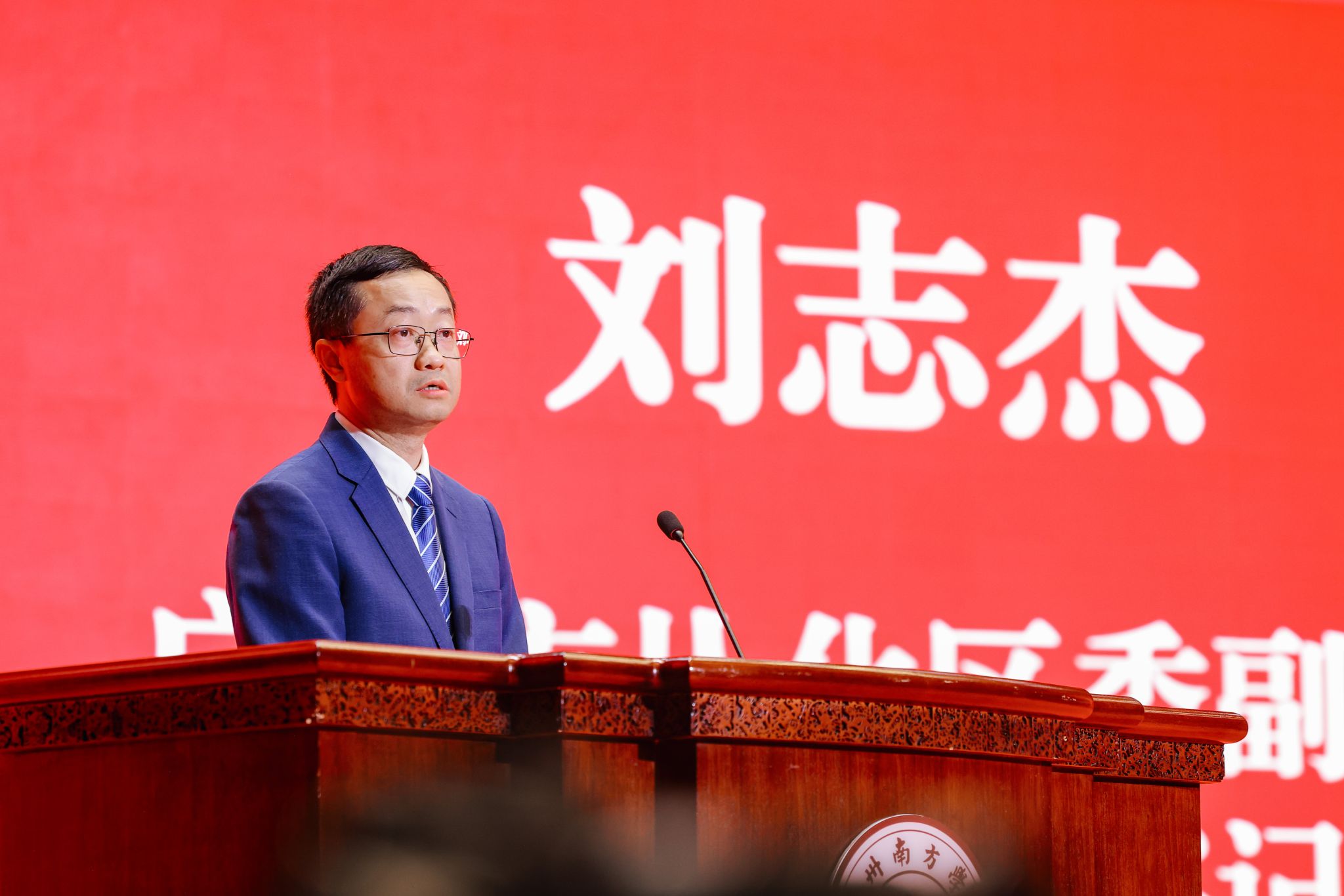
Zhang Yaorong, Executive Vice President of the Guangdong Association for Private Education, placed NCG’s achievements within the wider development of private higher education in China. Private universities and independent colleges, he noted, have made an important contribution to the expansion of higher education through their varied educational models and flexible approaches. He expressed the hope that NCG would build on its achievements and continue towards its long-term ambition of becoming an institution with a century-long legacy.
Chairman Zhang Yi reaffirmed the commitment of the College’s organisers to its future, including continued investment in educational resources, improvements to facilities and stronger institutional support for high-quality development.
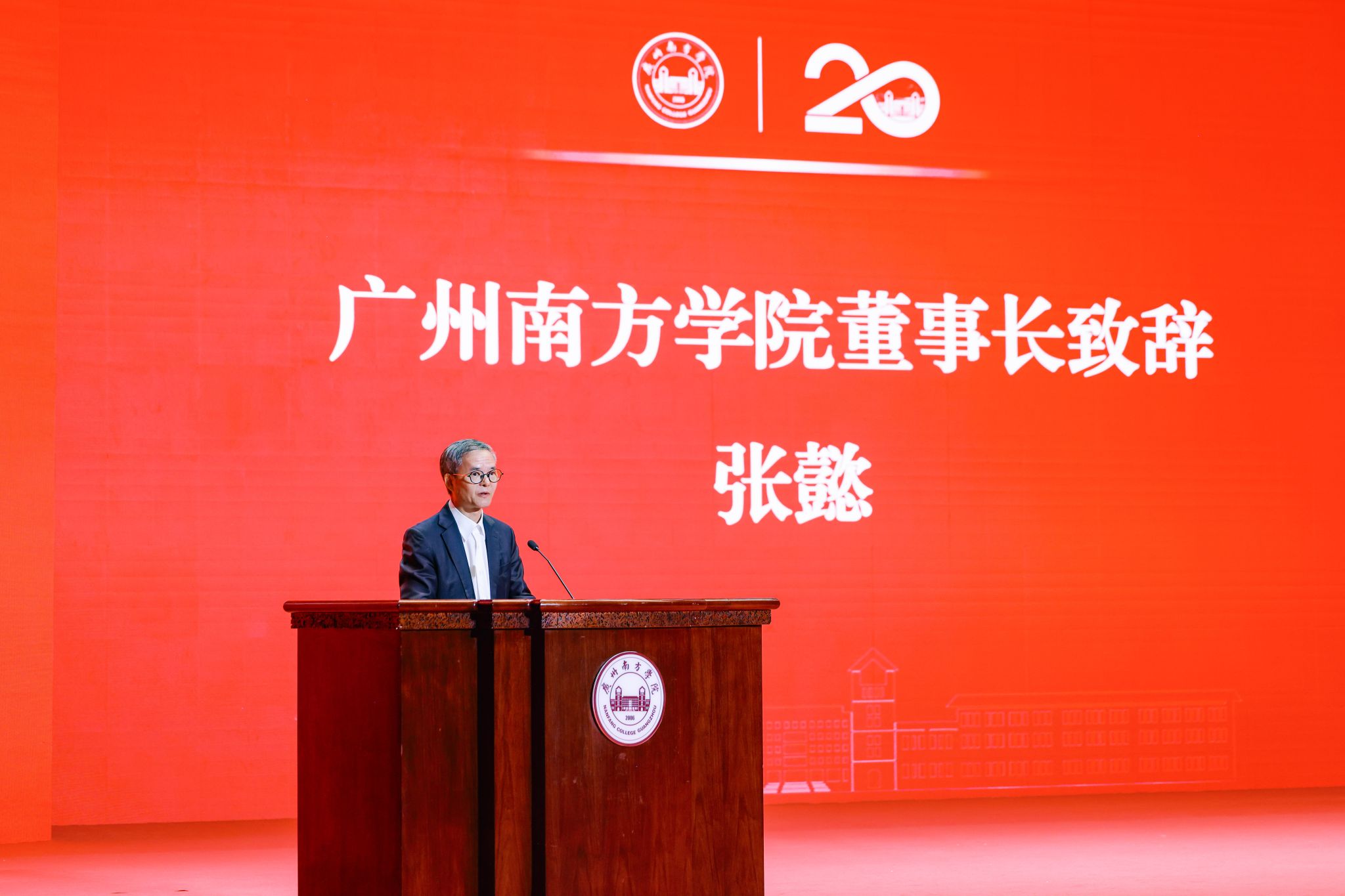
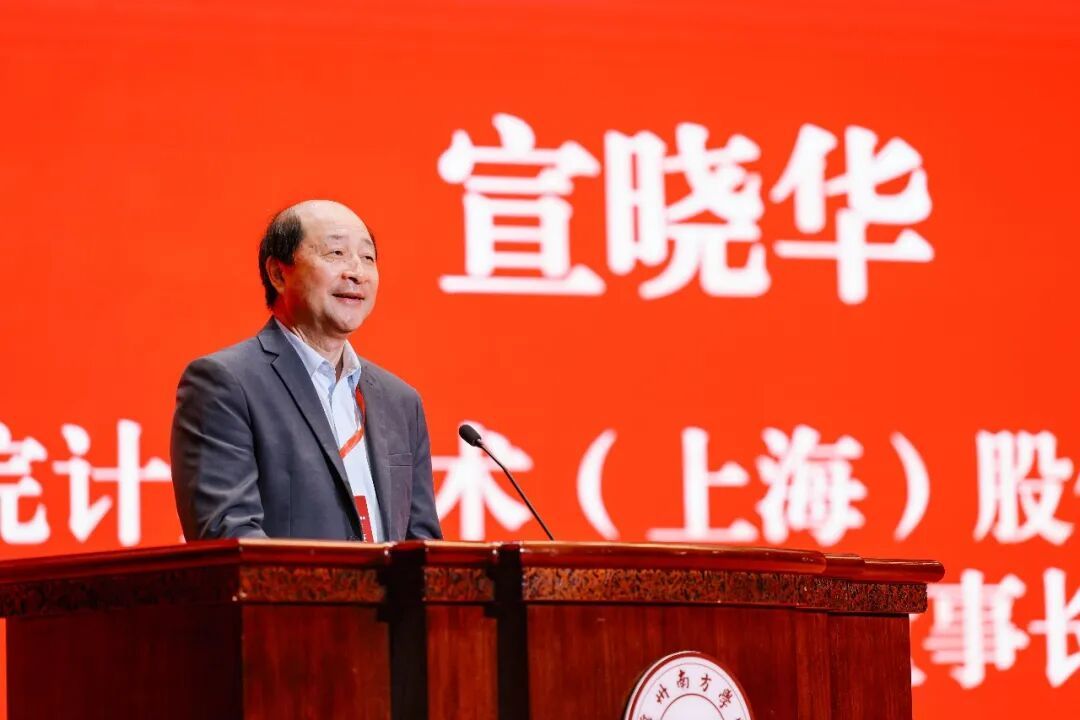
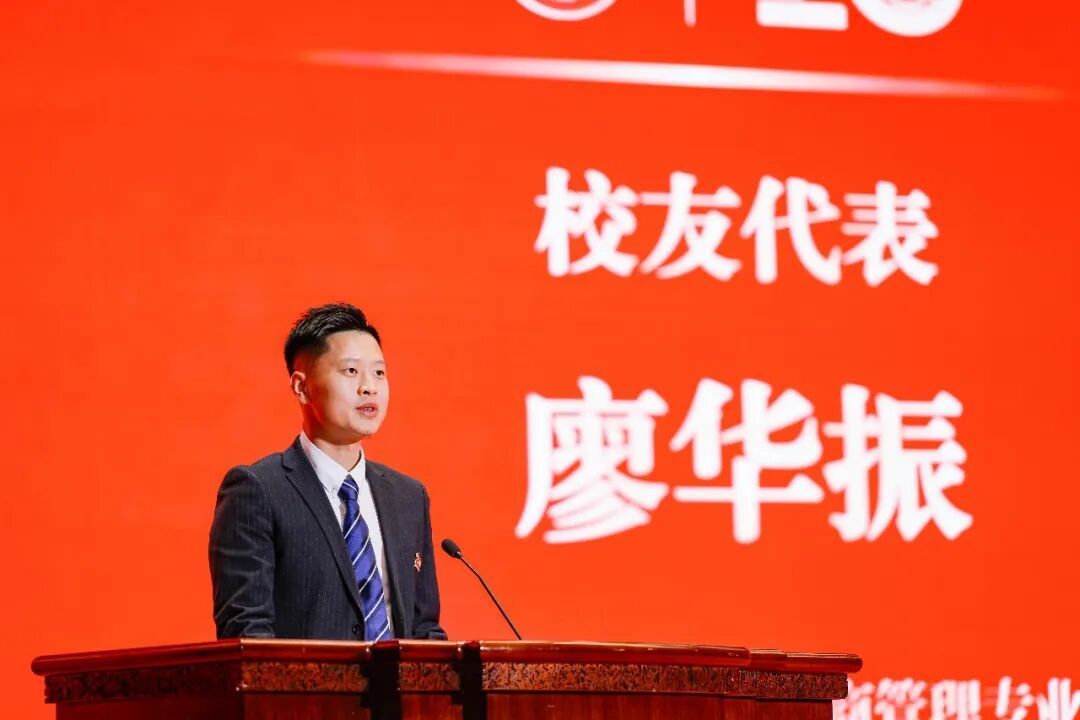
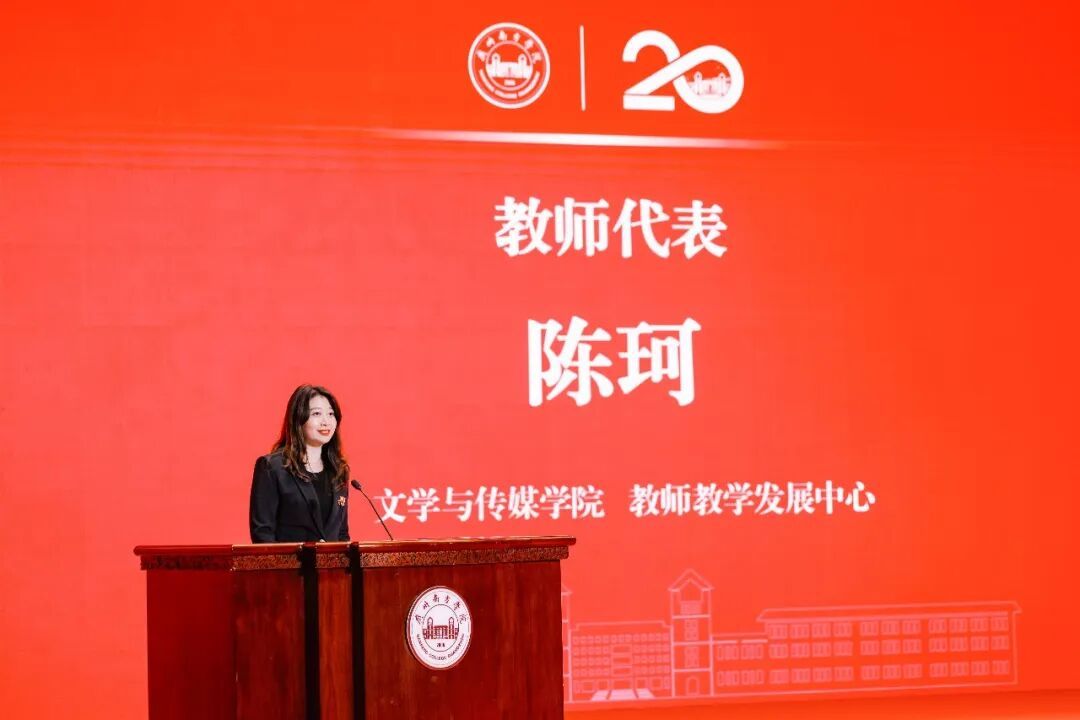
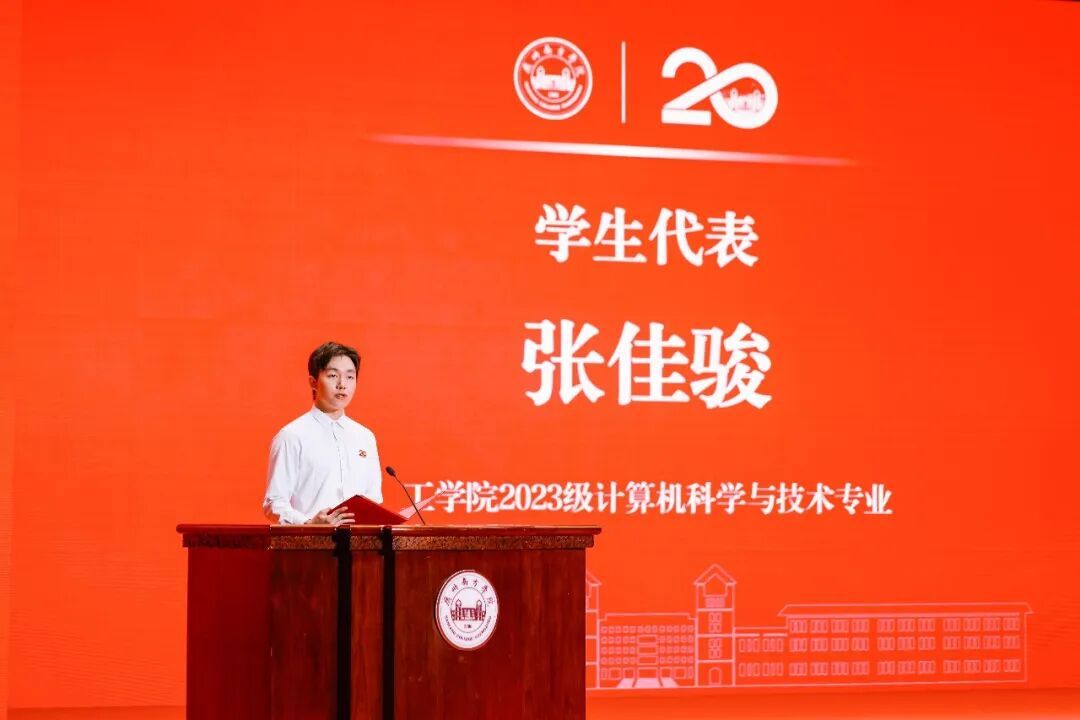
The conference also heard from Michael Xuan, Chairman of Huayuan Computing, representing NCG’s industry partners, alongside alumni, faculty and student representatives.
Twenty Years, Infinite Possibilities
One of the anniversary’s most memorable reflections came from Professor Efim Zelmanov, the Fields Medal-winning mathematician.
Congratulating NCG on its 20th anniversary, Professor Zelmanov spoke of its transformation from a newly established institution into a university with tens of thousands of students and a clear educational vision.
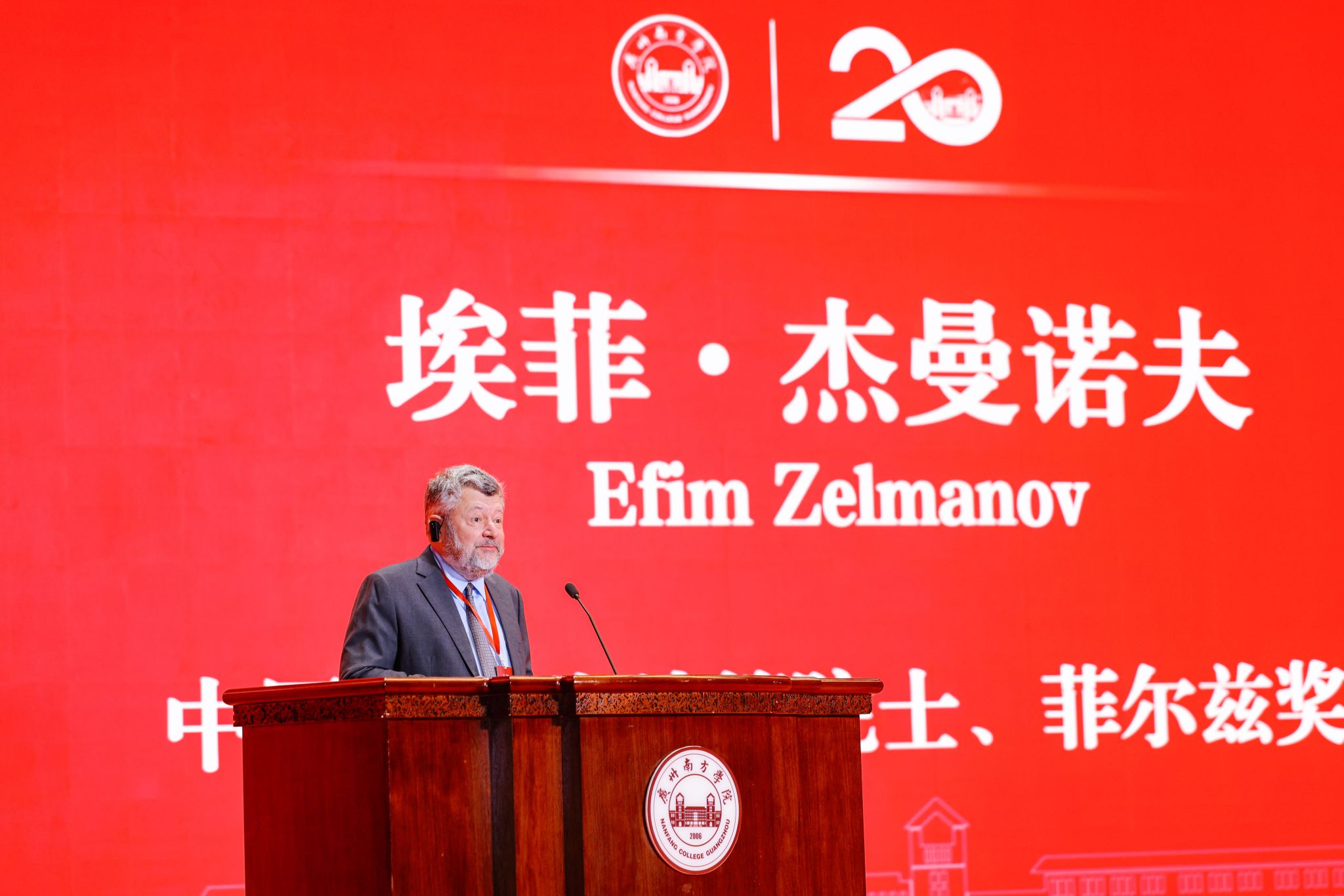
As a mathematician, he was particularly drawn to the anniversary logo, which brings together the number 20 and the infinity symbol (∞). For him, infinity is not about reaching a final destination, but about the possibilities that continue to unfold beyond it.
The design offered a fitting expression of the anniversary’s wider significance: NCG’s first 20 years represent not an endpoint, but a foundation for what comes next.
A New Chapter: Pursuing “Double Excellence”
The conference marked a significant step towards that future with the launch of NCG’s initiative to pursue “Double Excellence” as a high-level application-oriented undergraduate institution.
The initiative follows the State Council’s 15th Five-Year Plan for Education Development, which calls for the development of high-level application-oriented undergraduate institutions distinguished by two qualities: strong institutional capacity and outstanding contributions to regional economic and social development.
For NCG, these goals bring together priorities that have guided its development over the past two decades. The College will continue to place fostering virtue through education at the centre of its mission while strengthening academic programmes, applied research, technological innovation and the preparation of highly skilled graduates.
The launch signals NCG’s intention to work towards the national “Double Excellence” standards, building on its existing strengths and developing a more distinctive role in supporting regional industries and communities.
The occasion also invited reflection on the College’s beginnings. Established in 2006 through a partnership between Sun Yat-sen University and Guangdong Pearl River Investment Co., Ltd., NCG was originally known as Nanfang College of Sun Yat-sen University. Drawing on the educational traditions of its founding university, it has since developed its own identity as a private, application-oriented undergraduate institution.
As NCG enters its third decade, its academic priorities are taking clearer shape: refining its New Liberal Arts programmes, strengthening New Engineering, expanding New Medicine and consolidating the sciences. These efforts will be supported by closer collaboration with industry and a continued emphasis on developing graduates with strong professional knowledge, practical capabilities and well-rounded development across moral, intellectual, physical, aesthetic and labour education.
Rooted in the Greater Bay Area, NCG aims to deepen its contribution to industrial upgrading, regional economic and social development, and China's wider efforts to strengthen education.
Twenty years after its founding, the College carries forward the educational traditions and partnerships that have shaped its journey, with new ambitions for the generations of students yet to come.
Source: https://www.nfu.edu.cn/info/2131/121951.htm


